

As Autumn Approaches
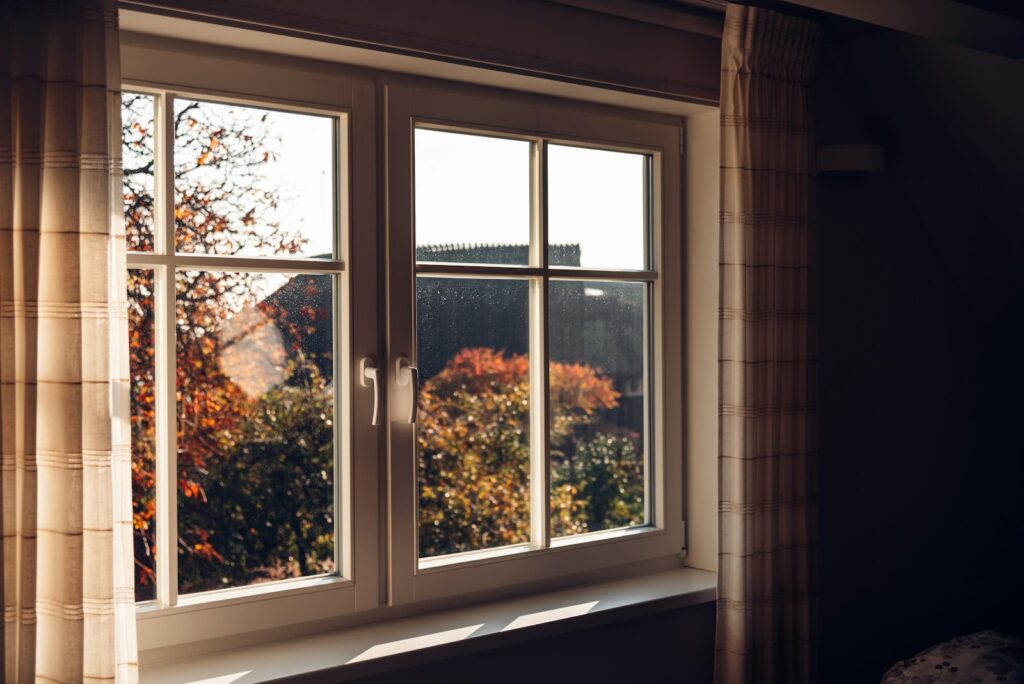
As autumn approaches, the clocks haven’t changed yet but you’ll already have noticed it: darker mornings, an earlier dusk, and a lower, harsher sun that streams into rooms it barely reached all summer. The right blinds and shutters do more than cut the glare, they protect your comfort, your privacy as the evenings draw in, and the window treatments themselves from a season that is tougher on them than most people realise.
The Nights Are Drawing In — What That Means for Your Windows
Later sunrises and earlier sunsets change more than your morning routine. As the sun sits lower in the sky through autumn, it travels deeper into rooms that barely saw direct light over summer, catching screens, furniture and window treatments at new angles for weeks or months at a time.
That low autumn sun brings two everyday headaches. The first is glare, a harsh, hard-to-shift shaft of light that can make a west-facing living room or a south-facing home office uncomfortable to sit in for parts of the day. The second is privacy: once the evenings draw in and the lights go on before you’ve thought to close the blinds, anyone outside can see in far earlier than they could in June.
How the Sun Can Fade Blinds and Shutters
Sunlight does not just brighten a room; UV and infrared exposure gradually break down the dyes and fibres in blinds and shutters, and low autumn sun often strikes surfaces that stayed shaded all summer, so fading can show up faster than you would expect.
A few patterns are worth knowing:
- Fabric roller and Roman blinds can lose colour and become brittle where they take direct sun, especially along the folds.
- Wooden shutters and venetian blinds can dry out, warp or crack when direct low sun combines with the temperature swing between cold nights and heated rooms.
- Faux wood and PVC finishes can discolour or warp if they sit close to concentrated heat as well as light.
- Uneven fading is the most common giveaway, slats or panels left in the same position for weeks develop stripes or patches where the sun caught them and the rest stayed protected.
Preventative Measures to Protect Your Window Treatments
A little variation goes a long way. Rather than leaving blinds fully open or fully closed for the whole of autumn, try tilting the slats to diffuse the low sun rather than blocking it outright, and vary the angle and position through the week so the same section of fabric or wood is not always the one catching direct light.
A few other habits help protect your investment:
- Keep blinds and shutters a little clear of radiators and other direct heat sources, the combination of heat and sunlight causes more stress than either alone.
- If you are choosing new window treatments for a south- or west-facing room, ask about UV-resistant fabrics and finishes designed for stronger sun exposure.
- For particularly exposed rooms, a UV-protective film on the glass can take some of the strain off the blinds or shutters themselves.
If you are not sure what suits a particular room’s aspect, get in touch for advice before you buy. The right material for a north-facing bedroom is not always the right one for a sun-drenched conservatory.
Keeping Blinds and Shutters Fresh Through Autumn and Winter
Alongside protecting them from the sun, a little regular care keeps blinds and shutters looking fresh as the weather turns:
- Dust weekly. A soft cloth or feather duster on hard surfaces, and a gentle vacuum with a brush attachment for fabric blinds, stops autumn dust and pollen building up.
- Watch for condensation. As the heating comes on and evenings cool, condensation can settle on glass and nearby fittings, wipe it away with a dry cloth promptly to avoid dampness or mould taking hold.
- Test the mechanism. Cooler temperatures can affect how smoothly blinds tilt or shutters swing, so it is worth checking they open and close freely before you rely on them daily through winter.
For more on the condensation side of things, our guide to preventing mould and mildew on blinds and curtains and our winter care guide cover the months ahead in more detail.
Quick Answers to Common Autumn Window Questions
Does sunlight really fade blinds?
Yes, UV and infrared light break down the dyes and fibres in blinds and shutters over time, and low autumn sun often strikes surfaces that were shaded all summer, so fading can appear surprisingly quickly.
Should I keep blinds closed to protect them from fading?
Not entirely. Leaving them in one position causes uneven fading. Varying the slat angle and position through the week protects them more evenly than leaving them fully open or fully closed.
What’s the best way to clean blinds in autumn?
A weekly dust with a soft cloth or feather duster for hard surfaces, and a gentle vacuum with a brush attachment for fabric blinds, keeps most autumn dust and pollen at bay.
Can autumn condensation damage my blinds and shutters?
Yes, if left unwiped. Wipe away condensation with a dry cloth as soon as you notice it to prevent dampness or mould.
At Coventry Blinds, we help homes across Coventry and Warwickshire choose window treatments that work as hard in October as they do in June. Explore our range of made-to-measure Blinds and Curtains and Plantation Shutters — all professionally fitted across Coventry and Warwickshire.